Free Printable · Ages 5–8 · Spending Decisions

Penny's Needs vs Wants Sorting Worksheet

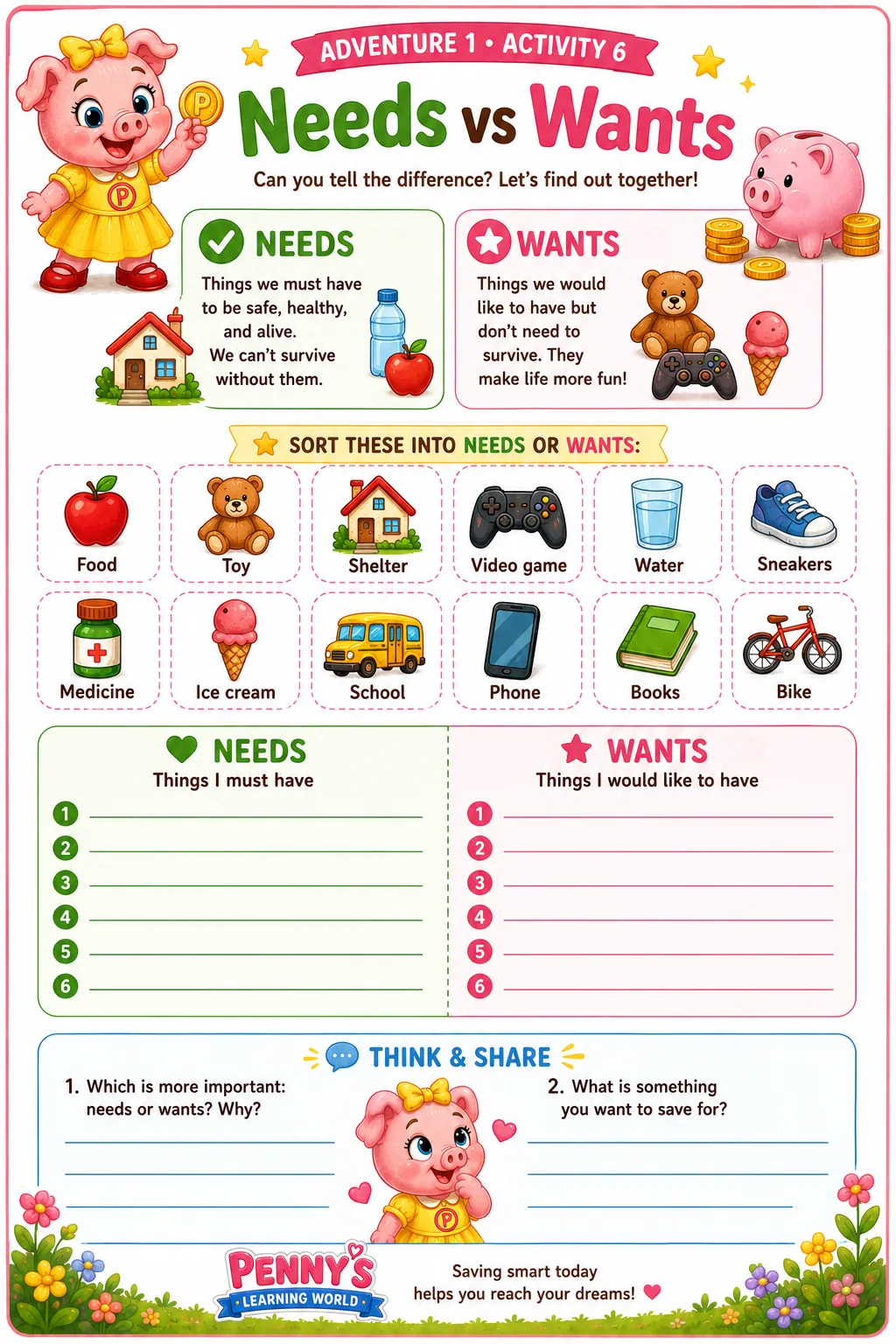
A hands-on two-column activity where young learners sort 16 item cards with Milo the Mouse — and discover which wants are worth saving for.

Get Free Printable

What's Inside the Worksheet

This free printable from Penny's Learning World gives children ages 5–8 a concrete, playful way to learn one of the most foundational money skills there is: the difference between a need and a want. Set in Milo the Mouse's Market — a cheerful little shop brimming with everyday items — the worksheet presents 16 illustrated item cards. Kids cut them apart (or draw their own in the blank versions), read or listen to each one, and then place it in the correct column: Need or Want.

The layout is intentionally simple. The two-column format echoes how financial decisions actually work — you weigh one thing against another. The Need column is anchored by a clear visual cue (a checkmark and a green border), while the Want column gets a gold star and a warm amber tone. Even children who aren't reading yet can follow along when a parent or caregiver reads the cards aloud.

What makes this worksheet stand out is the reflection question at the bottom: "Which item in the Want column would you most like to save for?" This single question does something powerful — it validates wanting things while redirecting that energy into a savings goal. Rather than "wants are bad," children leave the activity understanding "wants can be goals." That mindset shift is the whole point. If you're working on building that saving habit alongside this worksheet, check out the Kids Savings Challenge for a structured, step-by-step way to help children reach their first savings goal.

The printable is designed to be used once as a guided activity and then re-used as an open-ended sorting game — you can add seasonal or themed cards (holiday gifts, back-to-school supplies, birthday wish lists) to keep the conversation fresh all year long. For families exploring broader financial literacy for kids, this worksheet makes a natural starting point before moving into topics like earning, saving, and giving.

What Children Learn

Categorization

Children practice distinguishing needs from wants using a clear, age-appropriate framework — building the mental habit of pausing before spending.

Critical Thinking

Sorting familiar objects requires children to apply the framework to real life, not just repeat a definition. This builds genuine understanding over rote memorization.

Self-Awareness

Kids begin to recognize that wants vary from person to person — one child's dream toy is another's "meh." That's a surprisingly sophisticated idea for ages 5–8, and it lands naturally through discussion.

Decision-Making

The reflection question at the end connects wants to savings goals, teaching children that wanting something isn't a problem — it's the starting point for a plan.

How to Use This Worksheet

You don't need any supplies beyond a printer — though scissors, crayons, and a few minutes together go a long way. Here's how to get the most out of the activity:

  1. 1
    Print and prepare. Print the worksheet on standard letter paper. Cut apart the 16 item cards along the dotted lines. Younger children love this part — let them help. You can also skip the cutting and have children draw an arrow pointing to the right column instead.
  2. 2
    Read each card aloud together. For each item, ask: "Do we need this to be safe and healthy, or do we want it because it would be fun?" There's no rush — the conversation is the point. Some items will spark great debates, and that's wonderful.
  3. 3
    Sort the cards into columns. Let the child physically place each card in the Need or Want column. The hands-on movement helps reinforce the categorization. If they disagree with your suggestion, explore their reasoning before redirecting — you might be surprised by their thinking.
  4. 4
    Discuss the reflection question. Point to the Want column and ask: "Which of these would you most like to save for?" Write their answer on the line at the bottom of the sheet. This creates a small, real savings intention — and gives you something to revisit next week.
A note from Milo the Mouse "At my market, I see every kind of item every day — apples and sneakers and video games and soup. You know what I've figured out? Everyone needs some things, and everyone wants lots of things, and both of those are completely okay. The secret is knowing which is which — because that's how you start making really smart choices with your coins."

Meet Milo the Mouse →

Frequently Asked Questions

What are needs and wants for kids?

Needs are things essential for safety, health, and daily life — food, clothing, shelter, and basic school supplies. Wants are things that are nice to have but not necessary — toys, treats, games, and gadgets. Teaching this distinction early helps children make intentional spending choices rather than impulsive ones. The key is keeping the definition concrete: "Would you be unsafe or unhealthy without it?" If yes, it's a need. If no, it's a want — and that's completely okay.

At what age can children understand needs vs wants?

Most children grasp the concept around age 5 with concrete, familiar examples. By ages 6–7, most can apply the framework independently. The worksheet works best for ages 5–8. For younger children (3–4), use just 4–6 items and discuss together rather than sorting independently. Abstract definitions ("needs are necessary") won't land yet — but "we need food so our tummies don't hurt" makes instant sense. Start with what they know and build from there.

What if my child argues that a toy is a need?

That means they're engaged — and that's a great sign! Redirect with a question rather than a correction: "If we couldn't buy that, would you be unsafe or unhealthy?" If the answer is no, it's a want — and that's perfectly okay. Acknowledge the desire warmly: "You really love that toy. Sounds like a great savings goal!" Turning a want into a savings goal is one of the most powerful early money lessons there is. It shifts the conversation from "no" to "not yet — and here's how."

Get Your Free Penny's Needs vs Wants Sorting Worksheet ✉️

Join Penny's Clubhouse — your free printable arrives in the welcome email.

For parents. We only email about Penny's Learning World.